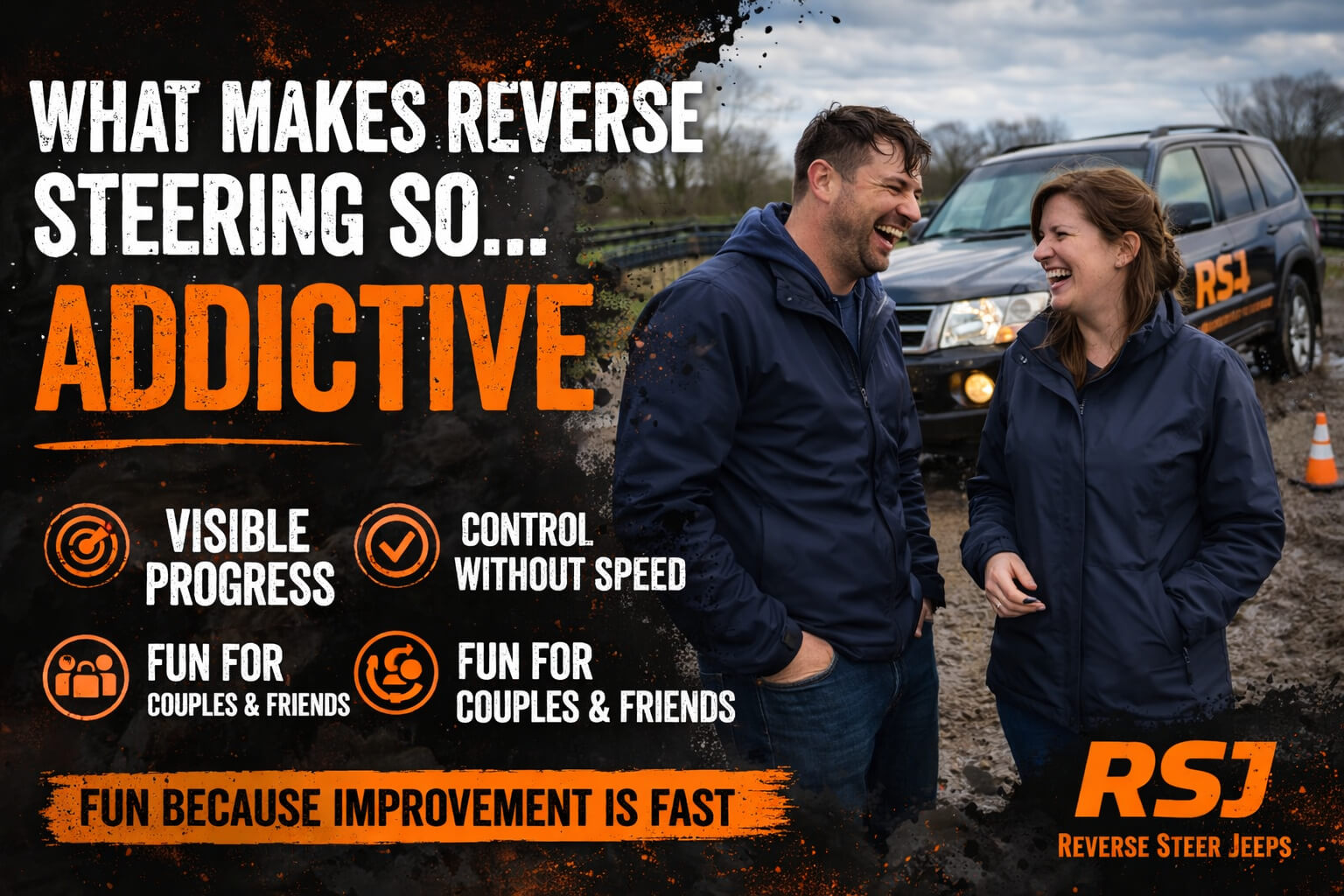
Reverse steering is unusual because improvement is visible almost immediately. At the beginning, most people feel slightly off balance. The vehicle responds differently than expected, and the first reactions are slower than normal. Within a short time, the brain begins adjusting and the movements become more controlled.
That quick transition from confusion to control creates a strong sense of progress. The activity does not rely on speed or risk. Instead, it rewards smooth inputs and attention. People feel the difference between the first few corners and the later ones, and that contrast makes the experience memorable.
Progress you can actually feel
Many activities take time before improvement becomes noticeable. With reverse steering, the feedback is immediate. Small adjustments in steering produce visible changes in how the vehicle moves. This helps people understand what works without needing long explanations.
Because the improvement happens quickly, confidence tends to increase during the same session. People often describe the experience as satisfying rather than intense.
It engages focus without pressure
Reverse steering naturally brings attention to the present moment. The unfamiliar steering response encourages careful observation, but the environment remains controlled and structured.
There is no need to perform or compete aggressively. The activity allows people to concentrate on coordination and timing, which creates a calm but engaging experience.
Equal starting point for everyone
One reason people enjoy reverse steering in groups is that nobody arrives already experienced. Normal driving habits do not give an advantage here. Everyone begins at roughly the same level.
This removes social pressure and makes the experience feel fair. Friends and couples often find the shared learning process as enjoyable as the driving itself.
Control feels more rewarding than speed
Many outdoor activities rely on intensity or adrenaline. Reverse steering works differently. It focuses on precision and adaptation.
Achieving smooth control gives a clear sense of achievement without requiring physical effort or risk-taking. That balance appeals to people who want something active but measured.
Why people often want another run
Once the steering starts to make sense, curiosity increases. People want to see whether they can improve further, take corners more smoothly, or react earlier.
Because progress feels achievable, the motivation to try again comes naturally. The experience becomes less about finishing and more about refining control.
In simple terms
Reverse steering becomes engaging because improvement happens quickly, the rules are simple, and the result feels earned. The unusual steering creates interest, and the rapid adaptation keeps people involved from the first minutes to the last.